
CampFlow: from spreadsheets to a connected operation
An integrated experience to turn the manual management of campgrounds into a simple, predictable and profitable operation — from first contact to the lot ready for the next guest.
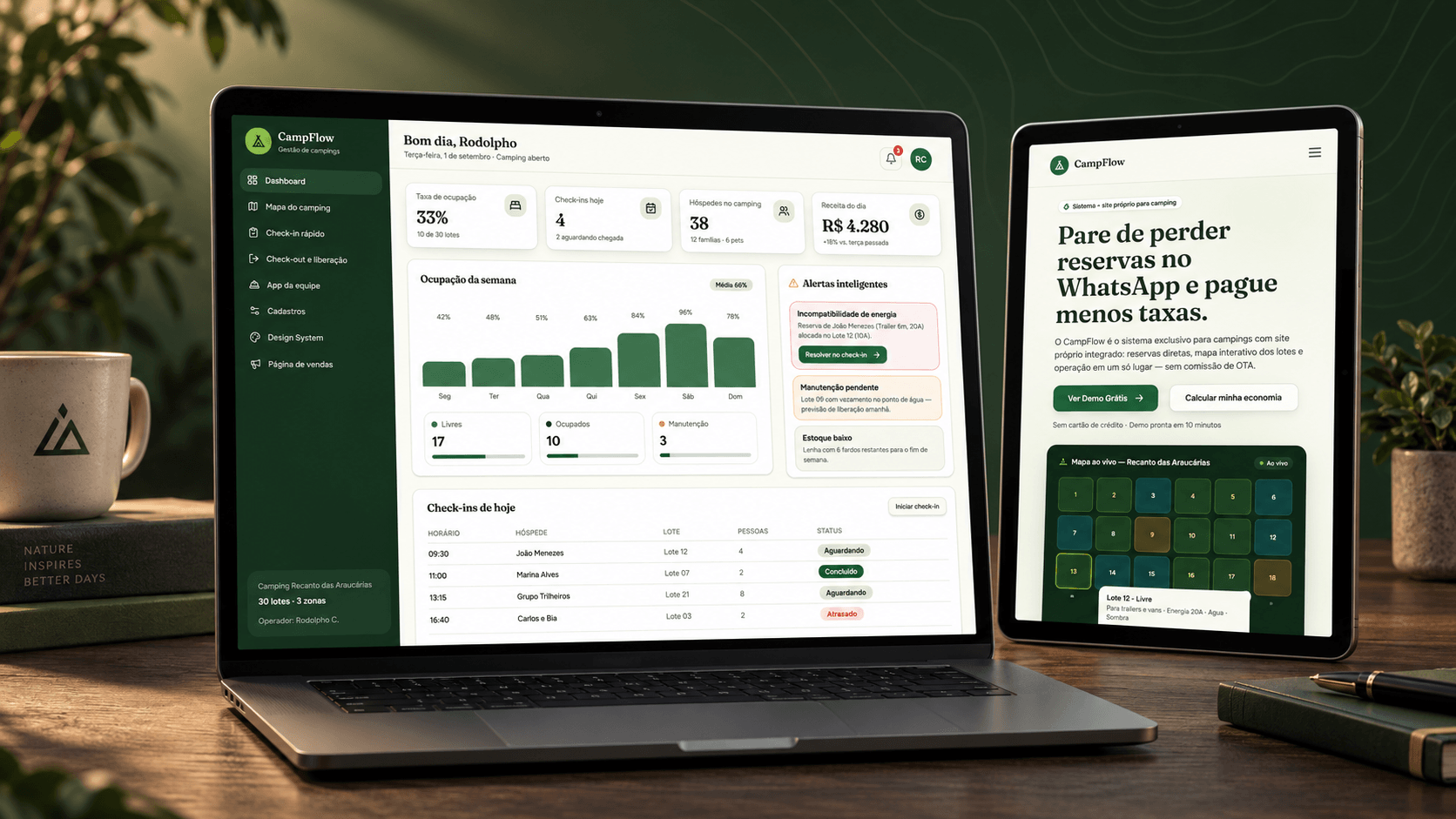
Context
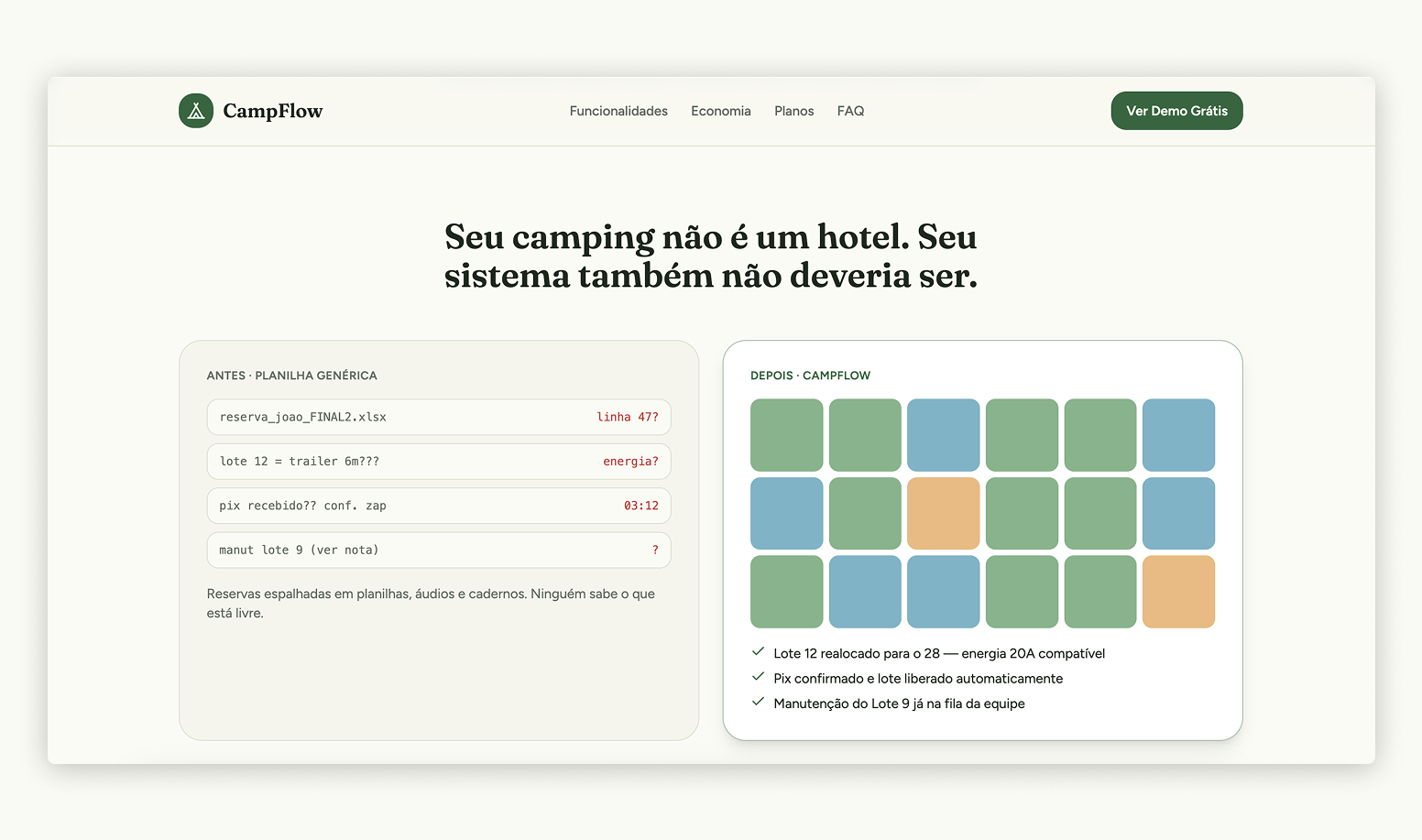
Many campgrounds still manage reservations, payments, occupancy and maintenance through a mix of WhatsApp, spreadsheets and informal team knowledge. The method works until the operation grows — then duplicate bookings, invisible tasks and decisions without data emerge.
CampFlow was born as a single ecosystem to connect management, reception, field work and the camper's experience.
The Problem
The challenge wasn't just digitizing a spreadsheet. It was translating a physical, dynamic operation full of exceptions into an experience that stayed simple on the busiest days.
How do we give the manager control of the whole without adding bureaucracy to whoever is at the front desk or in the field?
People
Four perspectives guided the product. Each needed an interface and a level of information compatible with their context.
Manager
Wants to see occupancy, cash flow and bottlenecks to decide quickly.
Reception
Needs to locate reservations, accommodate walk-ins and complete check-ins without queues.
Field team
Executes cleaning and maintenance on the phone, often under sun or rain.
Camper
Expects to book, pay and find their way autonomously before and during the stay.
Key Journey
The journey was organized as a continuous cycle. Each step updates the next, reducing rework and loss of context between people and channels.
Discover
Get to know the campground and compare options.
Book
Choose a lot, pay and receive confirmation.
Arrive
Identify the reservation and check in.
Stay
Consume services and receive support.
Release
Check out, inspect and prepare the lot.
From Strategy to Interface
a.A scalable system from the first pixel
Before designing screens, I established a semantic design system based on OKLCH tokens. The visual language balances "welcoming nature" (deep greens, sand, Fraunces serif for warmth) with "operational clarity" (status always visible via color + label + dot, never color alone). Accessibility is built-in: AA contrast, visible focus, and 44px minimum touch targets for field use.
Semantic Palette & States
#26673C#3B9555#E69C3A#C9302D#193220Status Components (Color + Label + Dot)
a.A control tower for the manager
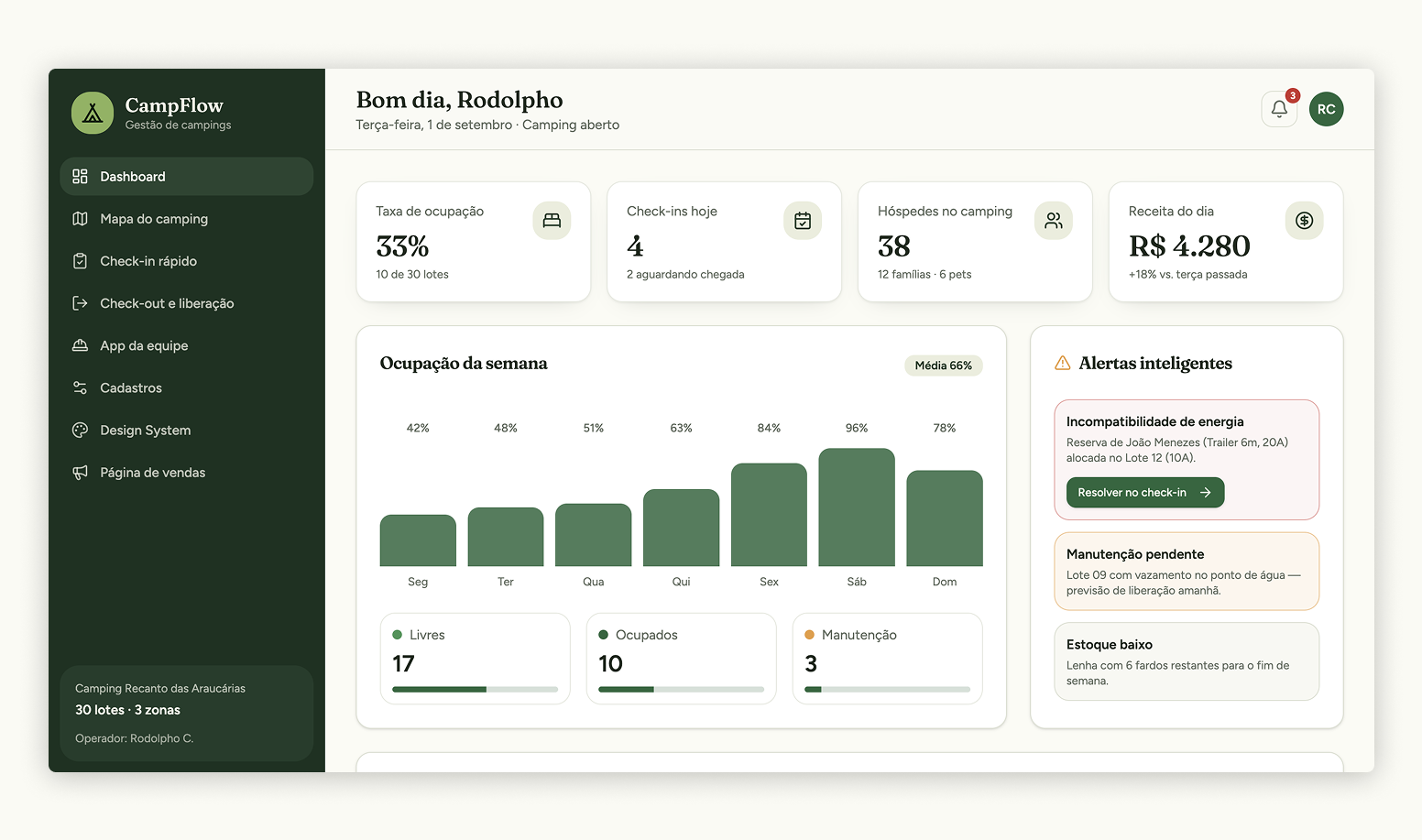
The dashboard concentrates the day's signals — occupancy, arrivals, revenue, maintenance and alerts — and leads directly to action. The goal is to replace fragmented searching with quick reading and prioritization.
The daily agenda turns indicators into next steps.
b.Daily operations at a glance
The check-in list provides real-time visibility of arrivals, lot assignments and status, allowing the reception to manage the flow without queues or confusion.
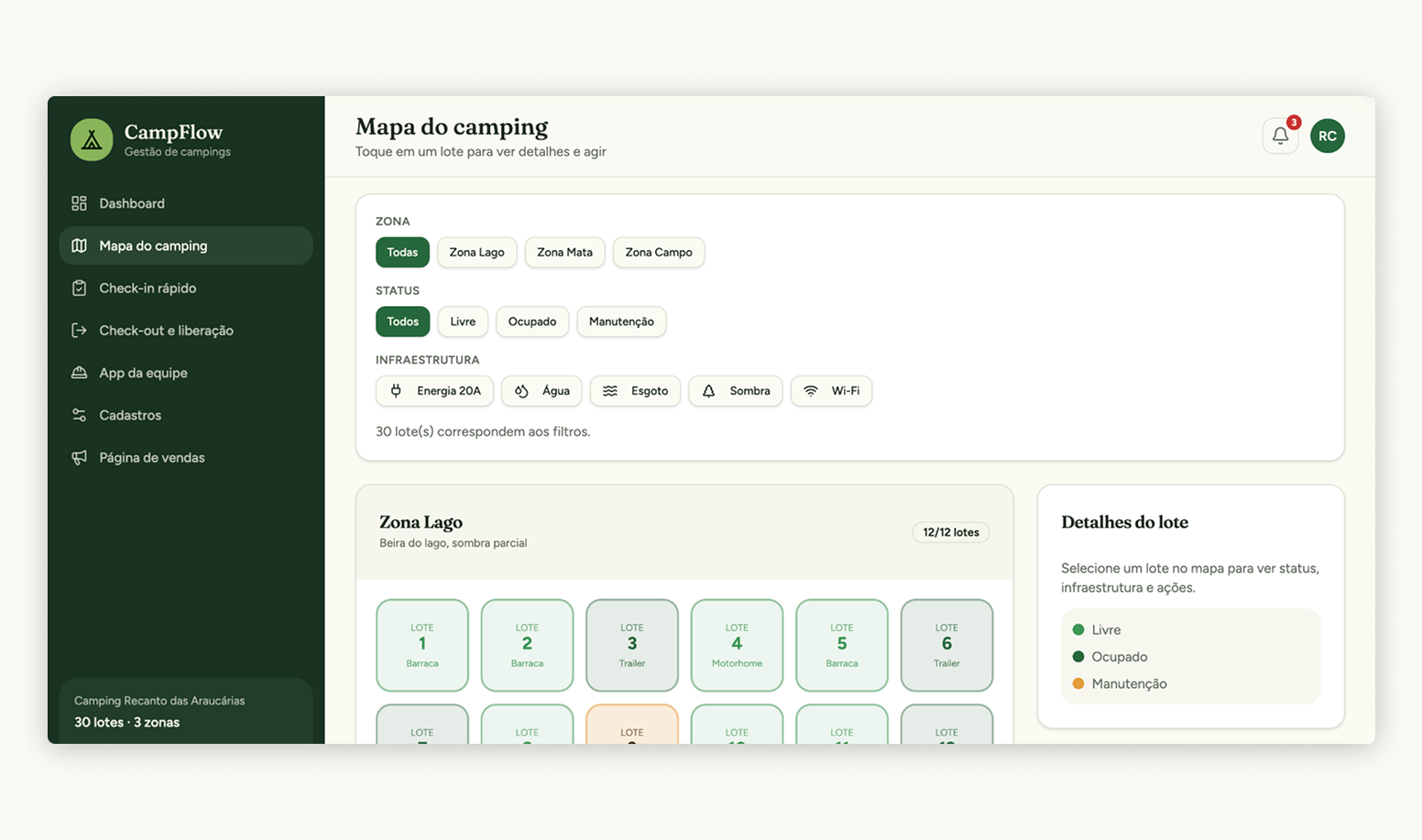
c.The campground as it really is
Instead of treating lots like hotel rooms, the visual map represents zones, infrastructure and status. Filters reduce the effort to find compatible options.
d.Guided check-in, no improvisation
The five-step flow starts by identifying the guest and guides reservation, services, payment and confirmation. Compatibility rules help reception without overloading the screen.
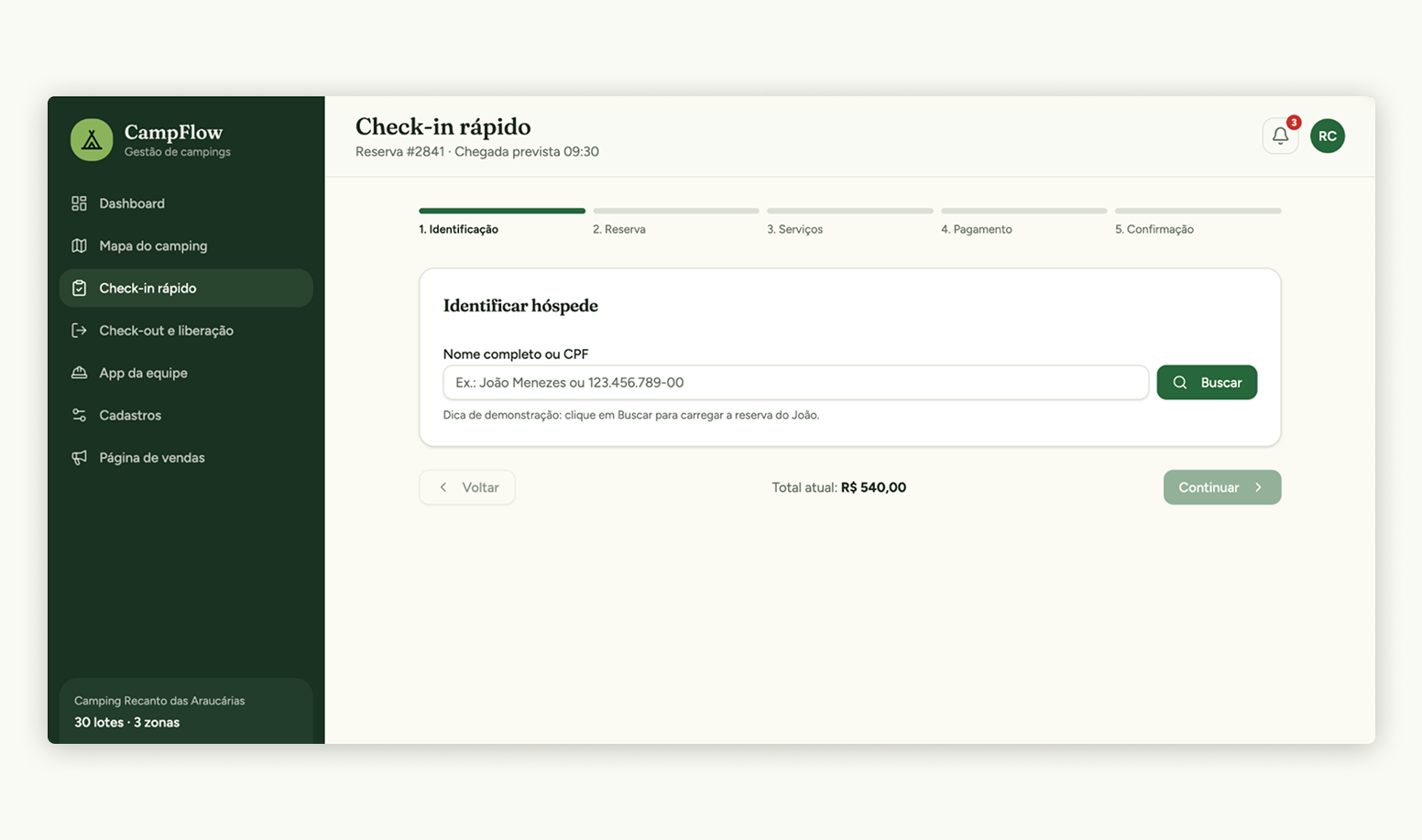
A progressive process keeps focus and makes the total always visible.
e.The experience starts before arrival
The camper receives automated confirmations, maps and support directly on WhatsApp — the channel they already use. No new app to download, just a seamless extension of the operation.
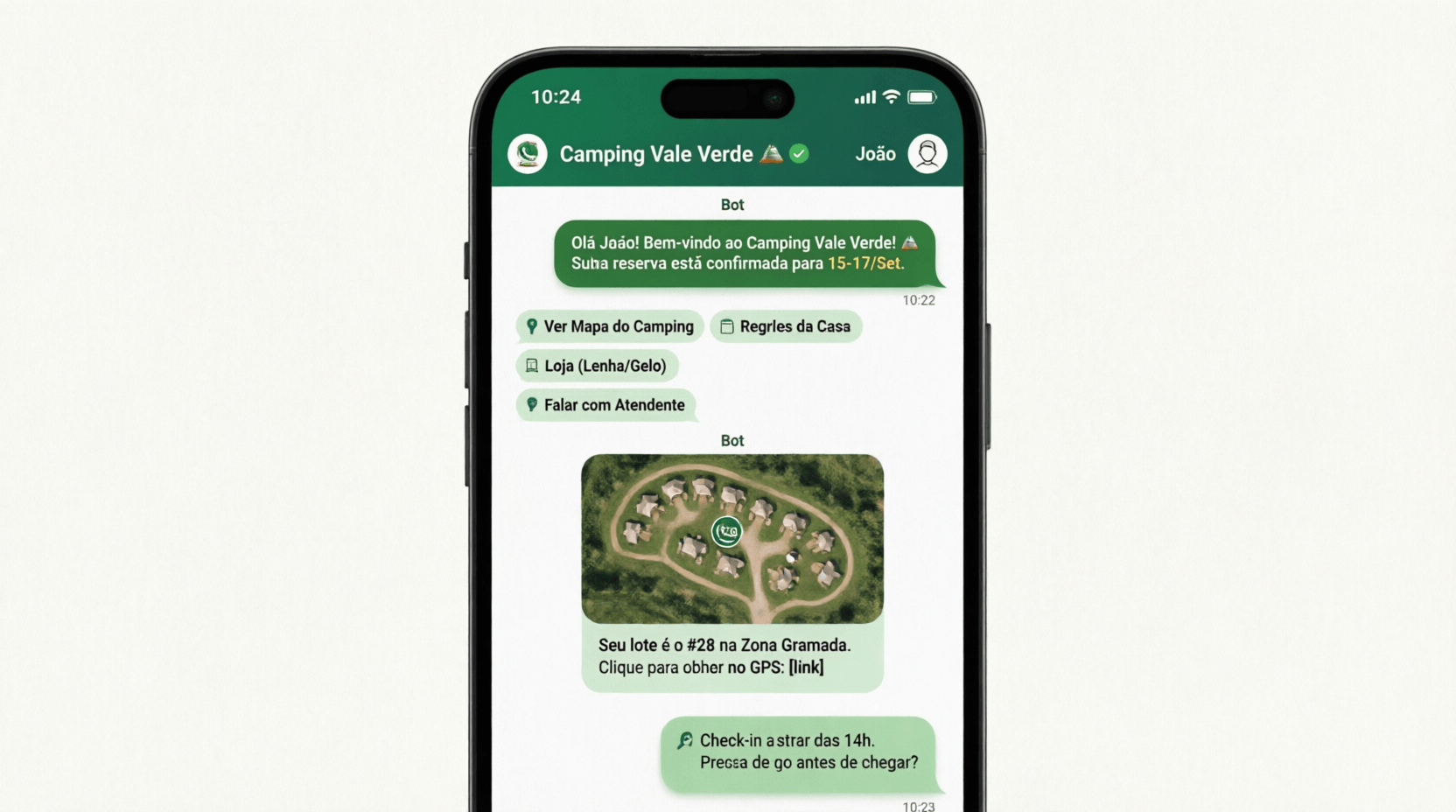
Meeting the user where they already are.
f.The operation in the team's pocket
The team app translates the operation into a prioritized task queue: each service order carries deadline, zone, responsible person and status — with large touch targets and high contrast for outdoor use. Real-time alerts keep reception and field in sync: new check-ins, urgent OS and released lots arrive the moment they happen.
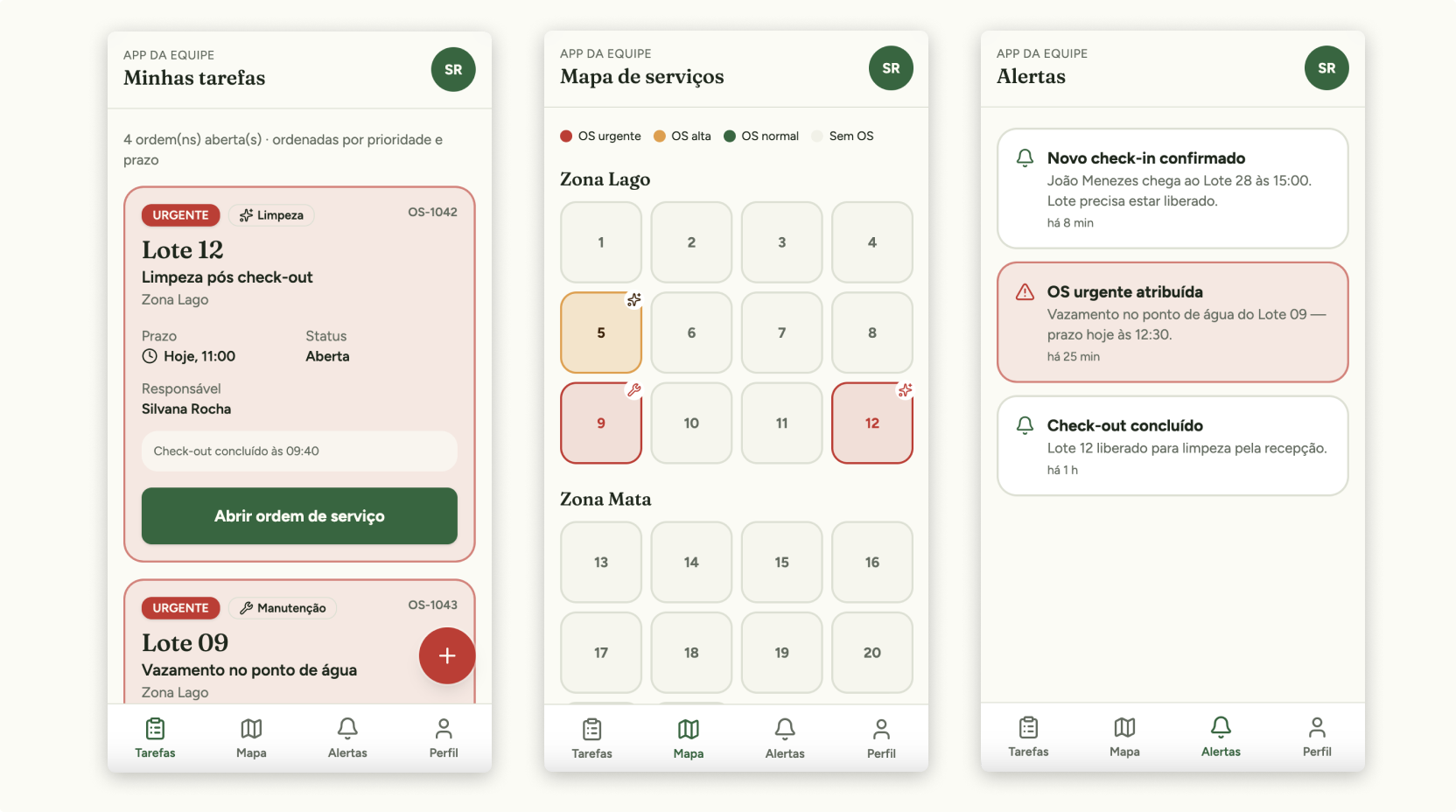
Prioritized tasks and real-time alerts — designed for gloves, sun and noise.
Outcome
The prototype materializes an integrated product vision: each interaction feeds the next and offers each profile only what it needs to move forward. The expected result is a more predictable operation and a smoother journey for the guest.
Unified view of occupancy, revenue and operation
Less conflict between reservation and lot capacity
Guided check-in prepared for additional sales
Continuity between reception and field team
Results presented as impact hypotheses of the prototype; metrics should be validated in a pilot.
Learnings
Designing for campgrounds required respecting the logic of the territory, not blindly adapting hospitality patterns. The map stops being an illustration and becomes a decision tool; and good automation happens when the system connects people without asking them to think like the system.